




If you’ve lived in Lincoln for a while, you’ll know our heating systems work hard. Long winters, older radiators in period terraces, modern combis in newer estates, it all adds up to wear and tear. One of the most common things I get asked about when I’m visiting homes locally is power flushing. What is it? Is it necessary? Is it just something heating engineers suggest when a boiler’s playing up?
The truth is, a lot of heating issues I see could have been avoided with a proper central heating flush at the right time. In this post, I’ll explain in plain English what power flushing actually does, how it works and how to tell if your system might need it.
What Is Sludge and Why Is It a Problem?
Inside your central heating system, water is constantly circulating through pipes and radiators. Over time, that water reacts with the metal components inside the system. When steel radiators start to corrode internally, they produce iron oxide. That’s the black, dirty sludge you sometimes see when draining a radiator.
This sludge doesn’t just sit harmlessly at the bottom. It collects in radiators, blocks narrow pipework and can lodge itself inside your boiler’s heat exchanger. I’ve removed radiators in Lincoln homes before and found them half full of thick black water. Unsurprisingly, those rooms were always the coldest in the house.
When sludge builds up, it can cause:
- Cold spots at the bottom of radiators
- Noisy pipes or banging when the heating comes on
- Poor hot water performance
- Boiler lockouts and fault codes
- Higher energy bills because the system works harder
If left long enough, it can shorten the life of your boiler. And that’s when a relatively simple maintenance job turns into a much bigger expense.
How Does Power Flushing Work?
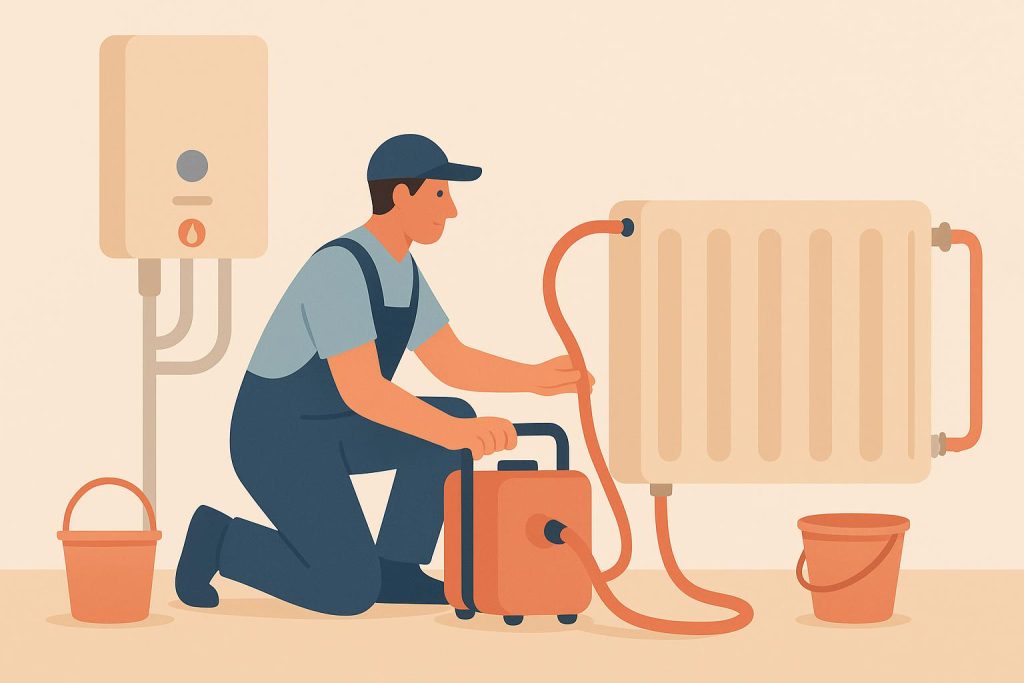
When we carry out power flushing in Lincoln properties, we connect a specialised flushing machine directly to your heating system. This machine circulates water at a high flow rate, much stronger than your normal pump, to dislodge and remove built-up sludge and debris.
Cleaning chemicals are added to break down corrosion deposits inside the radiators and pipework. The system is flushed radiator by radiator until the water runs clear. It’s not a five-minute job. On an average three-bed semi, you’re usually looking at most of the day.
Once the system is clean, we drain it, refill with fresh water and add inhibitor. That inhibitor is important. It helps prevent new corrosion forming too quickly.
Some people ask if a standard drain-down is the same thing. It isn’t. Simply emptying the system won’t shift compacted sludge stuck in pipework. A proper central heating flush uses the right equipment and method to agitate and remove the build-up properly.
What Are the Benefits of a Central Heating Flush?
The biggest difference most homeowners notice straight away is improved heat across the house. Radiators warm up evenly, rooms heat faster and the boiler doesn’t seem to run constantly.
Other benefits include:
- Lower energy usage because the system runs more efficiently
- Reduced strain on the boiler
- Quieter operation
- Better reliability during colder months
- Extended lifespan of radiators and components
I’ve had customers say it feels like they’ve had a new heating system installed, when in reality it just needed a thorough clean. Particularly in older Lincoln properties with original pipework, it can make a noticeable difference.
It’s also often recommended when fitting a new boiler onto an existing system. Most manufacturers insist on it to protect the warranty. Connecting a brand new boiler to dirty pipework is a bit like putting fresh oil into an engine full of grit.
Signs You Might Need Power Flushing
Not every heating issue means you automatically need power flushing. Sometimes it’s just air in a radiator or a faulty valve. But there are some clear warning signs I look out for when I’m on a job.
You might benefit from a power flush if:
- Radiators are cold at the bottom but warm at the top
- Your boiler makes kettling or rumbling noises
- The heating takes a long time to warm up
- You’ve had repeated bleeding of radiators
- Some radiators never seem to heat properly at all
- Your system water looks dark when drained
I often get called to houses where one room is always chilly. Nine times out of ten, that radiator is partially blocked with sludge. A flush usually sorts it.
If your boiler keeps cutting out and there’s no clear fault with the parts, sludge restricting circulation can be the underlying issue. Modern boilers are sensitive and will shut themselves down to avoid damage.
Is It Worth Doing?
If your heating system is relatively new and well maintained, you may not need it yet. But if it’s over five years old and showing some of the signs above, it’s worth having it checked properly.
A central heating flush isn’t about selling something unnecessary. It’s about cleaning out years of internal build-up before it causes expensive breakdowns. From experience across Lincoln homes, preventative maintenance almost always works out cheaper than emergency repairs in January.
If you’re in Washingborough, North Hykeham or Lincoln and you’re unsure whether your system needs attention, it’s better to ask than ignore the signs. Matt Harland carries out honest assessments and will tell you straight if power flushing is worthwhile or not. At Matt Harland, the focus is on keeping your heating running properly, not pushing work you don’t need.
If you’d like your system checked and want clear advice from someone local, don’t wait until the cold really sets in. Book power flushing