




A central heating leak isn’t always obvious. In many homes, pipework runs under floors and inside walls, so a leak can quietly cause damage long before you see water. The earlier you spot the warning signs, the easier (and cheaper) it is to fix.
If you live in Lincoln and your heating system hasn’t been behaving as it should, here’s how to tell whether a hidden leak could be the cause.
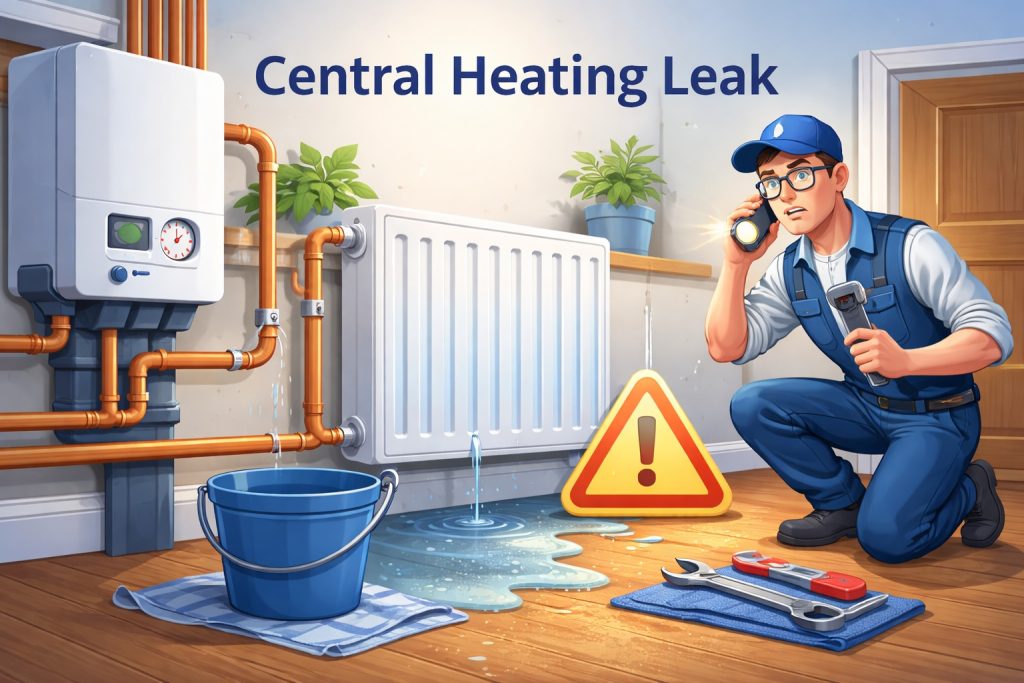
Common Signs of a Central Heating Leak
Look out for these early warning signs:
- Boiler pressure keeps dropping
If you’re constantly topping up the pressure, it’s often because water is escaping somewhere.
- Damp patches on walls or ceilings
Especially around skirting boards, corners of rooms, or near radiators.
- Musty smells or mould
Persistent moisture from a leak can lead to mould growth.
- Radiators needing frequent bleeding
Air getting into the system can be caused by a slow leak.
- Cold spots on floors or walls
Warm pipes leaking under floors can create unusual cold or warm patches.
- No visible leak, but water usage seems higher
A hidden leak can quietly increase your water bill.
Where Do Central Heating Leaks Usually Happen?
Leaks commonly occur in:
- Pipe joints under floors
- Radiator valves
- Old or corroded pipework
- Areas where pipes run through walls
- Poorly installed connections
Older homes in Lincoln are more likely to have hidden pipework beneath floorboards, which can make leaks harder to spot until damage appears.
Why You Shouldn’t Ignore the Signs
Even small leaks can cause:
- Damage to floors, walls, and plaster
- Rotting floorboards
- Mould and damp problems
- Reduced heating efficiency
- Ongoing pressure issues with your boiler
- Higher energy bills
Catching the issue early can prevent much bigger repair work later.
What to Do If You Suspect a Leak
If you think your central heating system might be leaking:
- Check your boiler pressure
If it drops again soon after topping up, there’s likely a problem.
- Look for visible signs of damp
Check around radiators, skirting boards, and ceilings below bathrooms.
- Don’t keep repressurising endlessly
Constantly topping up the system can cause more damage in the long run.
- Turn the heating off if there’s visible water
This helps prevent further damage until the issue is inspected.
- Arrange for a professional check
A qualified heating engineer can confirm whether there’s a leak and advise on next steps.
Is It Always a Leak?
Not necessarily. Pressure loss can also be caused by:
- Faulty pressure relief valves
- Issues with the expansion vessel
- Recent radiator bleeding
- Small faults within the boiler itself
That’s why it’s important not to assume – a proper inspection is the only way to know for sure.
When to Get It Looked At
You should arrange a professional check if:
- Your boiler pressure drops repeatedly
- You can see damp or water damage
- Your heating performance has suddenly worsened
- You’re unsure where the water loss is coming from
Ignoring it rarely makes it go away – it usually gets more expensive the longer it’s left.
Need Advice?
If you’re unsure whether you’ve got a central heating leak or just a pressure issue, it’s always better to ask. A quick check can save you from much bigger problems later.
Heating Solutions Lincoln
Friendly, honest advice for homeowners across Lincoln.
Call: 07717 224048
Request a call back