




One of the most common questions I get asked is:
“Should I install a system boiler or a combi boiler?”
It’s a genuine dilemma for many homeowners, and the answer isn’t one-size-fits-all. Both are excellent modern boilers, but they work differently and suit different households. Let me break down the differences so you can decide which is right for your Lincoln home.
What’s the Difference?
Combi Boilers
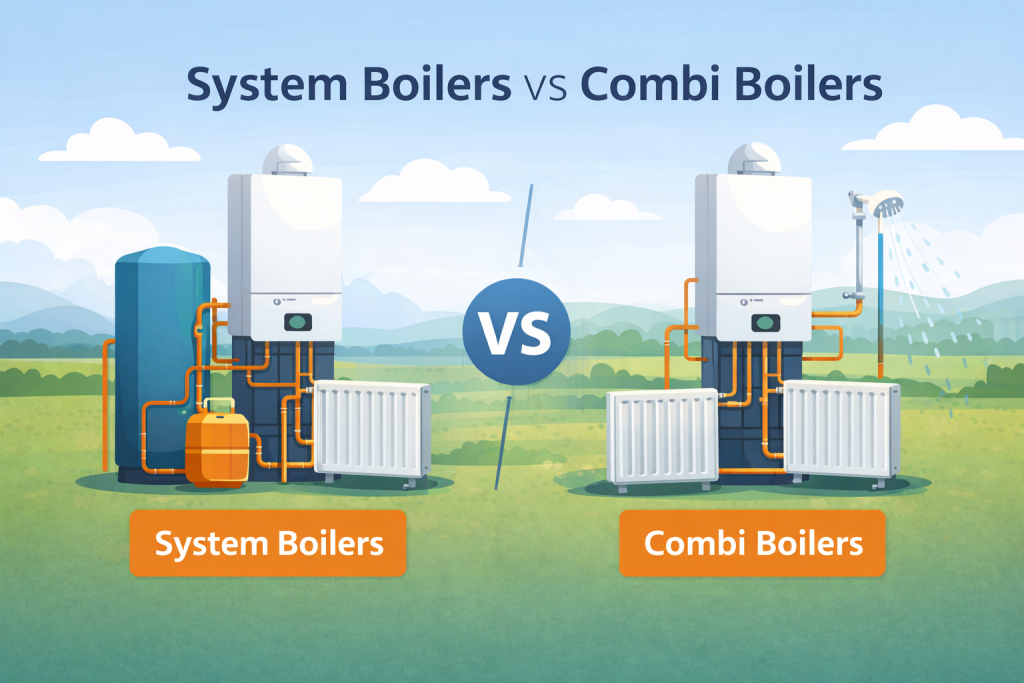
Combi boilers (combination boilers) heat your home and provide hot water on demand. They’re compact, wall-mounted units that do everything in one appliance. There’s no separate hot water cylinder or tank taking up space in your airing cupboard.
System Boilers
System boilers require a separate hot water cylinder (usually in the airing cupboard or under the stairs). The boiler heats water, which is then stored in the cylinder for use whenever you need it. Your central heating system works independently alongside this.
Combi Boilers: The Benefits
- Space-saving – No hot water cylinder, so combi boilers are perfect for smaller properties or homes where space is tight. This is a huge advantage in typical terraced houses and smaller semis where every cupboard counts.
- Lower installation cost – No cylinder means fewer components to install, which generally makes combi boilers cheaper to fit initially. You’re looking at £1,500–£3,000 fitted, compared to more for a system boiler.
- Energy efficient – Combis only heat water when you need it, so you’re not paying to keep a tank of hot water warm all day.
- Lower maintenance – Fewer moving parts and no cylinder means less that can go wrong.
- Good for smaller households – Ideal for one or two people who don’t use lots of hot water at once.
Combi Boilers: The Drawbacks
- Multiple taps issue – Running a shower and filling a bath at the same time can reduce pressure or temperature.
- Lower flow rate – Hot water flow is generally lower than with system boilers.
- Pressure sensitive – Low mains pressure can affect performance and may require a booster pump.
System Boilers: The Benefits
- Excellent for multi-bathroom homes – Multiple taps can be used at once without pressure drops.
- Higher flow rates – Better showers and faster bath filling.
- Better for larger households – Handles high demand more comfortably.
- Works with low pressure – Less affected by weak mains pressure than combi boilers.
- Flexible for upgrades – Easier to integrate with solar panels and heat pumps.
System Boilers: The Drawbacks
- More expensive – Extra components increase installation costs (typically £4,000–£6,000 fitted).
- Space required – You’ll need room for a hot water cylinder.
- Slightly less efficient – Some heat is lost storing hot water (modern cylinders reduce this).
- More maintenance – More parts mean more potential upkeep.
Which One for Your Lincoln Home?
Choose a Combi Boiler if:
- You live alone or with one other person
- You only have one bathroom
- Space is limited
- You want the lowest upfront cost
- Energy bills are a top priority
Choose a System Boiler if:
- You have two or more bathrooms
- You have a larger household
- You want strong water pressure throughout the home
- You don’t mind space for a cylinder
- Comfort and convenience matter more than minimal cost
The Lincoln Factor
Homes built before the 1980s often already have hot water cylinders, making system boiler upgrades easier. Newer homes are usually designed with combi boilers in mind.
Terraced and semi-detached homes in Lincoln often suit combis due to space constraints. Larger homes, Victorian conversions, and detached properties typically benefit more from system boilers.
Get a Professional Survey
The best choice depends on your water pressure, property layout, household size, and budget. What works for your neighbour might not work for you.
At Matt Harland, we offer free surveys to assess your home and recommend the best boiler option for your situation, including hybrid solutions where suitable.
If you’re unsure which boiler is right for you, give us a call. We’re happy to talk you through your options with no pressure and no hidden agenda.