




Most people think of air con as something for a July heatwave, then forget about it once the leaves start falling. Yet many modern split systems heat as well as they cool. In heating mode, the unit works as an air-to-air heat pump, pulling warmth from the outside air and releasing it into the room. It’s well suited to single rooms the central heating struggles with. If you have a system already, or are thinking about one, our air conditioning page covers what we install around Lincoln.
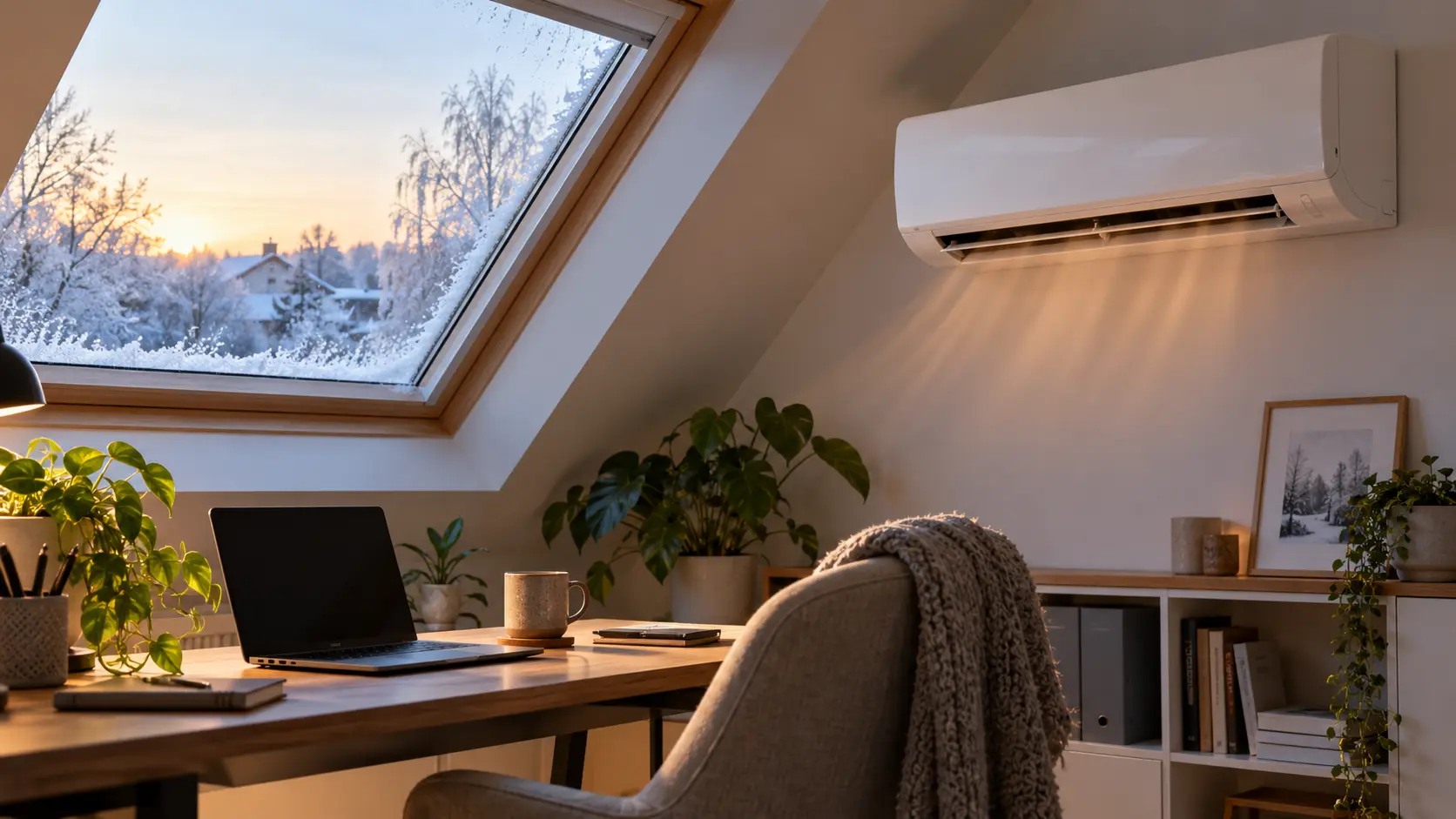
How heating mode works
A split system has an indoor unit on the wall and an outdoor unit outside, linked by refrigerant pipework. In cooling mode, it moves heat out of the room. In heating mode, it reverses the process, collecting heat from outdoor air (even cold air holds some) and delivering it indoors.
Because it moves heat rather than making it, a well-designed unit can deliver more heat than the electricity it uses. How efficient it is in practice depends on the unit, the outdoor temperature and how it’s installed.
Rooms where it makes most sense
- Loft conversions that are hot in summer and chilly in winter
- Home offices used during the day when the rest of the house doesn’t need heating
- Garden rooms and extensions that are hard to reach with the central heating
- Conservatories, where a radiator alone often isn’t enough
If you’ve read our blog on why loft conversions get so hot, the same rooms are often the ones that feel cold in January.
Using it alongside your boiler
Air con doesn’t replace central heating for the whole house in most homes, and it doesn’t make hot water. It works best as a top-up for one or two rooms. That can mean you don’t need to run the whole heating system just to warm the room you’re working in.
Set the room thermostat for the main heating as normal and use the air con unit’s own controls for the room it serves. Avoid setting both to fight each other in the same space.
Getting the best from it in cold weather
- Choose heating mode, not auto, if you want steady warmth
- Set a sensible temperature and leave it, rather than turning it right up
- Keep the filters clean, as clogged filters cut airflow and output
- Keep the outdoor unit clear of leaves, snow and anything stacked against it
- Expect defrost cycles. In cold, damp weather the outdoor unit may pause heating briefly to clear frost. That’s normal.
Running costs
Running costs depend on your electricity tariff, how much you use it, how well the room is insulated and the efficiency of the unit. We won’t quote figures here because they vary so much, but we can talk through what to expect for your room.
What to check before winter
If your system has been cooling all summer, give it some attention before switching to heating:
- Clean or wash the filters as the manual describes
- Check the condensate drain isn’t blocked or dripping
- Listen for new noises when it starts up
- Book a service if it’s due
Work on the refrigerant circuit must be done by an F-Gas certified engineer.
Winter comfort in Lincoln homes
Many homes around Lincoln, Washingborough and North Hykeham have loft conversions or rear extensions added over the years, often with a single radiator teed off an existing circuit. An air con unit with heating mode can be a practical way to make those rooms usable all year. For the rest of the house, keeping the boiler in good shape with a service still matters.
Frequently asked questions
Does air conditioning work for heating when it’s freezing outside?
Yes, most modern units keep heating below freezing, though output and efficiency fall as it gets colder. The unit may run short defrost cycles in damp, frosty weather. Check the manufacturer’s operating range for your model. For very exposed rooms, sizing the unit correctly at installation makes the biggest difference to winter performance.
Is air con heating cheaper than an electric heater?
A heat pump unit can deliver more heat per unit of electricity than a plug-in electric heater, which turns electricity directly into heat. How much you save depends on your unit, the weather and how you use it. It’s worth comparing for rooms you heat often, rather than ones used occasionally.
Can I add heating to my existing air con?
Only if the unit supports heating mode. Many split systems do, but some cooling-only models don’t. Check the manual or remote for a heating symbol. If yours is cooling only, an engineer can advise whether a replacement unit would be worthwhile for the room.
Want to use your air con for heating?
If you’d like warmth in a room the radiators can’t reach, give us a call on 07717 224 048 or drop us a message and we’ll look at the room and talk you through the options.