




The first chilly evening of autumn is when most of us switch the heating back on, and it’s often when you notice a radiator that’s warm at the bottom and cold at the top. That’s usually trapped air, and bleeding the radiator lets it out. You need a radiator key, a cloth and five minutes. If radiators stay cold after bleeding, or the boiler keeps losing pressure, book a boiler service or repair for Lincoln and the surrounding villages.
Why air gets into radiators
Air gets into a heating system over time, when it’s drained or topped up, and as water reacts with the metal inside radiators and pipes. Air rises, so it collects at the top of each radiator and stops hot water filling it.
The result is a cold top section, gurgling when the heating starts, or rooms that never quite warm up.
How to bleed a radiator, step by step
- Turn the heating on so the radiators warm up and you can feel which ones are cold at the top.
- Turn the heating off and let the radiators cool for a while. Hot water can spit out of the valve, so don’t rush this.
- Find the bleed valve. It’s a small square fitting at one of the top corners of the radiator.
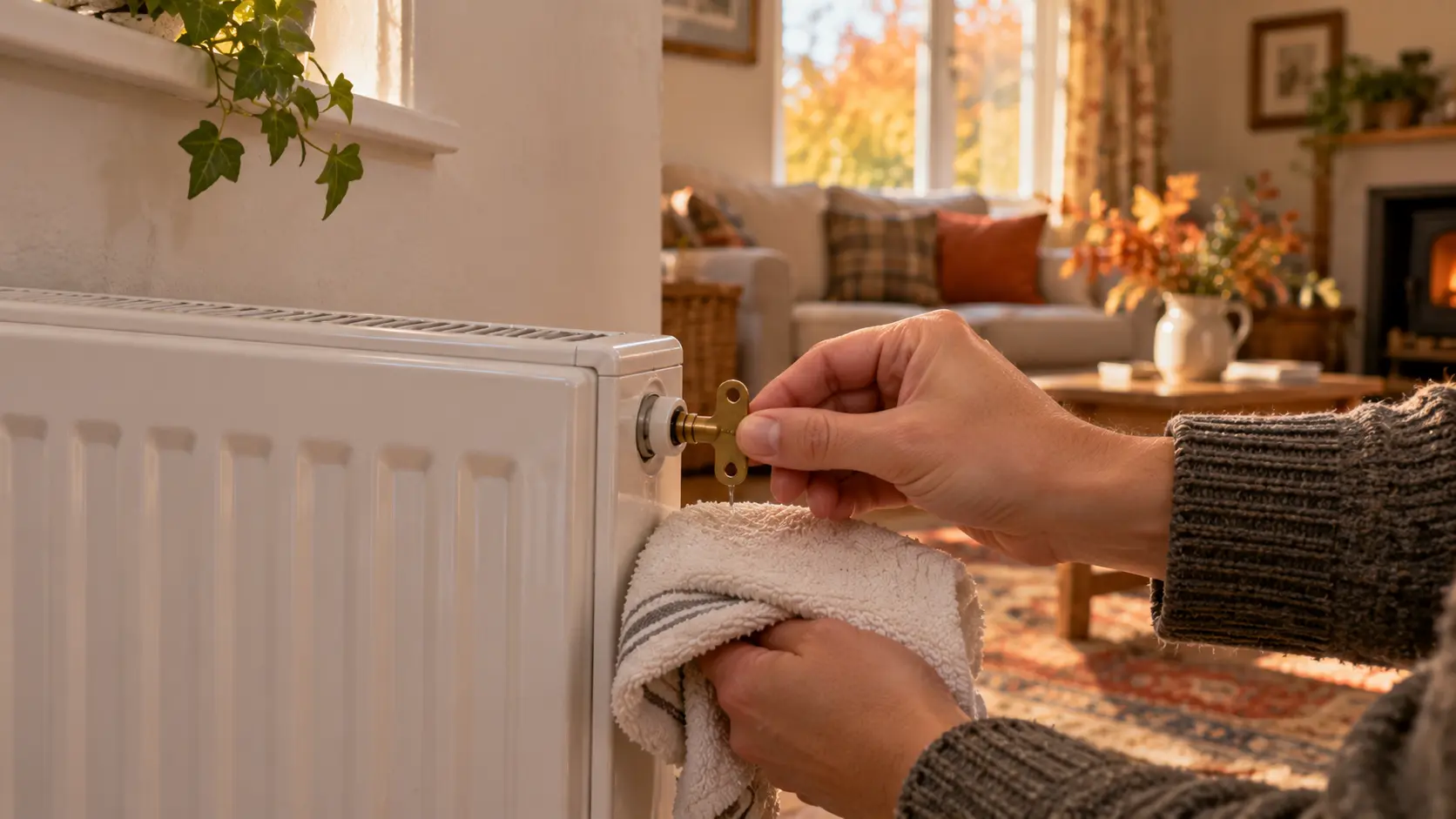
- Hold a cloth under the valve and fit a radiator key (or a flat-head screwdriver on some newer valves).
- Turn the key slowly anticlockwise, about a quarter to half a turn. You’ll hear a hiss as air escapes.
- Close the valve as soon as water starts to come out steadily. Don’t open it any further than you need to.
- Repeat on any other cold radiators, starting downstairs and working up.
Check the boiler pressure afterwards
Letting air out lowers the pressure in a sealed system, which is what most combi and system boilers use. Look at the gauge on the front of the boiler. Many boilers sit at around 1 to 1.5 bar when cold, but your boiler manual gives the right figure. If it has dropped below that, top it up using the filling loop, following the manufacturer’s instructions.
An older open-vented system with a loft tank refills itself.
Don’t remove the boiler casing or adjust anything inside it. That’s work for a Gas Safe registered engineer.
When bleeding doesn’t fix it
Bleeding won’t fix every cold radiator. Call an engineer if you notice:
- Cold at the bottom, warm at the top. This usually points to sludge collecting in the radiator, not air.
- Radiators that need bleeding every few weeks. Air keeps getting in somewhere, which can mean a leak or a fault.
- Boiler pressure that keeps dropping after you’ve topped it up.
- Upstairs radiators cold while downstairs are fine, which can point to a pump or balancing issue.
- Water leaking from the valve that won’t stop when closed.
Sludge problems are often dealt with by a system clean or power flush, and our engineers can check the pump, valves and pressure during a boiler service.
Getting your heating ready in Lincoln
Autumn is the time to do this. Many homes around Lincoln, North Hykeham and Washingborough have had the heating off since spring, and a quick bleed and pressure check means it’s ready when you need it. If your boiler is old and the radiators are a constant battle, it may be worth looking at a new boiler installation at the same time.
Frequently asked questions
How often should I bleed my radiators?
Only when a radiator is cold at the top or you hear gurgling. For many homes that’s once a year, when the heating goes back on in autumn. If you’re bleeding the same radiator every few weeks, something is letting air in and it’s worth having an engineer take a look.
Should the heating be on or off when I bleed a radiator?
Off. Turn it on first to find the cold radiators, then switch it off and let them cool before opening the valve. Bleeding a hot radiator risks scalding water spraying out, and with the pump running you can draw more air into the system.
Why is my radiator still cold after bleeding it?
If no air came out, or it’s still cold at the bottom, sludge is the most likely cause. A stuck thermostatic valve, a faulty pump or an unbalanced system can also stop a radiator heating. These need an engineer to diagnose, so book a repair visit rather than keep opening the bleed valve.
Do I need to top up the boiler after bleeding radiators?
On a sealed system, usually yes. Letting air out drops the pressure, so check the gauge and top up to the level your boiler manual recommends. If you have an older system with a header tank in the loft, it refills itself automatically and there’s nothing to top up.
Radiators still not right?
If your radiators won’t heat properly after bleeding, or the pressure keeps dropping, give us a call on 07717 224 048 or drop us a message and we’ll come and find out what’s going on.